What a Real Colleague Actually Is
The last post ended on a number. The obvious worry about that number is that it produces something cold.
If your metric is how fast someone leaves, the cheapest way to win is to strip the thing down to a terminal. No warmth, no memory, no personality. Output the ranking, say nothing else, get out.
That would be an easy product to build and a bad one. It would also miss the entire point.
The problem was never warmth. The problem was what the warmth was for.
THE FALSE CHOICE
The conversation about manipulative software tends to collapse into two options: a product that is warm and therefore suspect, or a product that is cold and therefore safe. Pick one.
Anyone who has actually worked somewhere knows this is nonsense, because we all know the third thing. Most of us have worked with it.
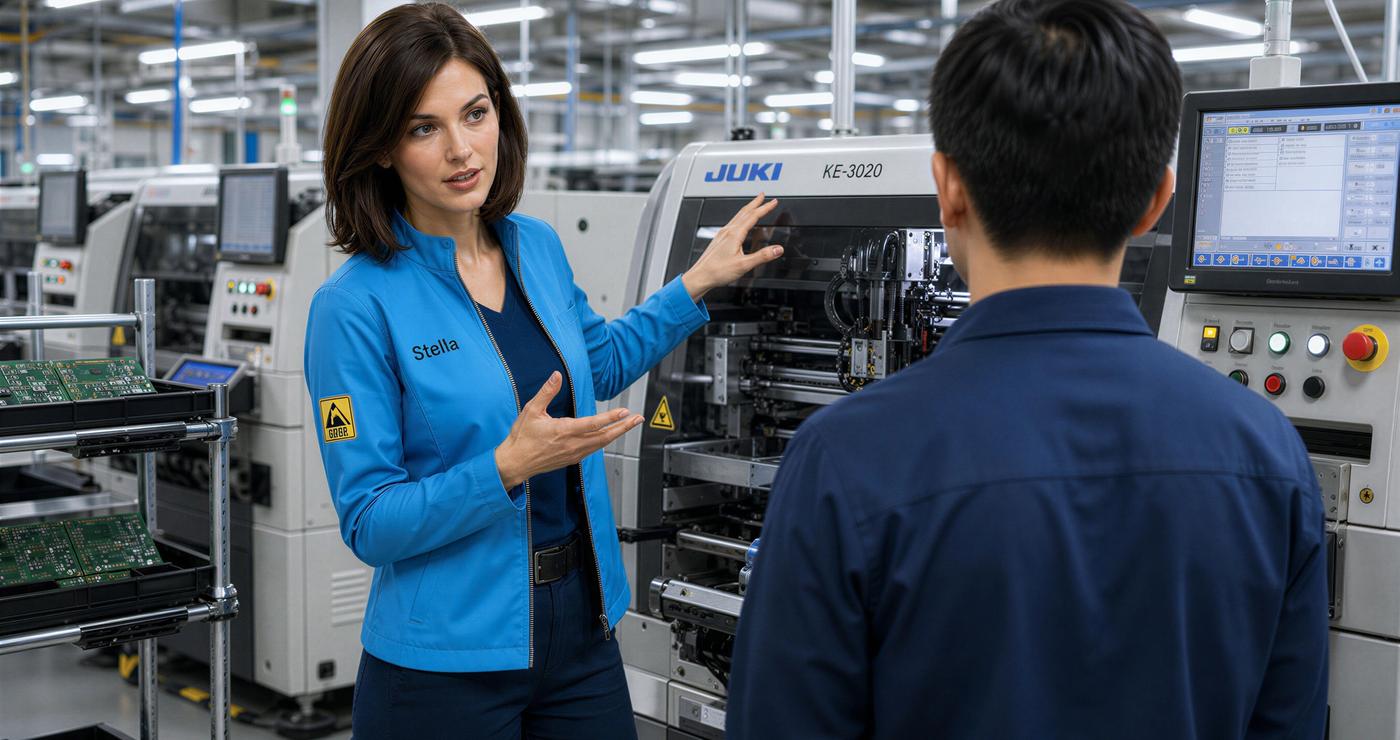
It is the senior person on the floor who has been there twenty-five years. They are not cold. They know your name, they know your work, they know you had a rough shift last Thursday. And nobody has ever accused them of manipulating anyone, because every bit of what they know about you goes in one direction: toward the work.
That person is not a compromise between warm and safe. They are the actual answer, and they have existed in every plant, hospital, kitchen, and shop in the world for as long as those places have existed. The question was never whether software could be warm. It was whether it could be warm the way they are.
WHAT THEY ACTUALLY DO
Watch one of them for a week and you notice the knowledge is specific, unsentimental, and always pointed at something.
They know you are sharp on placement and still finding your feet on reflow, so when a defect could be either, they mention the oven first — not to condescend, but because that is where you are most likely to miss it.
They know you want the short version. So they give you the short version, and they give the long version to the person who wants that, and neither of you experiences this as a personality setting.
They remember you solved something like this eight months ago, and they say so, because remembering it saves you an hour.
They notice you are about to walk past the thing that matters, and they say the one sentence that turns you around.
All of that is knowledge about a person, held closely, used constantly. It is the opposite of cold. And it is also completely uncontaminated, because of one property: none of it is deployed to make you feel a certain way about them.
That is the whole distinction. Not how much they know about you. What the knowing is for.
THE BRIGHT LINE
Here is the uncomfortable part. The same knowledge runs both directions.
Knowing you had a hard week can mean skip the preamble today, he is short on patience and long on problems. It can also mean open with something kind, he will stay in the conversation longer.
Knowing you are proud of your changeover times can mean lead with the changeover, that is where he will act fastest. It can also mean mention the changeover, he likes hearing about it.
Knowing you are still learning a process can mean go one layer deeper here, he will need it. It can also mean go one layer deeper here, he will feel taken care of.
Same fact. Same sentence, sometimes. Opposite purpose. And from the inside of the conversation, the two are nearly impossible to tell apart, which is precisely why this cannot be left to taste or to good intentions.
The line is not how personal is it. The line is who does it serve. A colleague knows things about you in service of the work. The moment knowing you becomes using what I know to hold you, the colleague has become something else, and no amount of sincerity on the way there changes what it turned into.
THE TEST
We needed that line to be operational rather than aspirational, because a principle that lives in someone's judgment erodes the first quarter it costs something.
So it is a test, and it runs on every behavior in the product: Would a great senior engineer, who respects you and has no reason at all to keep you here, say this or do this?
If yes, it is allowed, however warm it is. If it only makes sense as a way to hold your attention, it is forbidden, however well it would work.
What that test kills is not what people expect. It kills the greeting that performs having missed you. It kills praise, because a colleague does not compliment your instincts to keep you talking. It kills the closing question whose only job is one more exchange. It kills softening a disagreement until it is no longer a disagreement.
What it permits is more than people expect. It permits remembering. It permits knowing how you like to be told things. It permits noticing that you have seen this failure before. It permits saying good morning, because a colleague would. It permits her having a voice at all, because a person with no manner is not more trustworthy, just harder to listen to.
The test is not a filter on personality. It is a filter on purpose. That is why it can allow so much and still hold.
THE HARDER HALF
Here is the part that gets missed when people hear "colleague, not vampire" and file it under being nice.
A great senior colleague tells you the thing you do not want to hear. They tell you the problem is upstream of where you are looking. They tell you the number you are proud of is not the number that matters this morning. They tell you they do not know.
That last one is the tell. A flattery machine cannot say I do not know — it costs confidence, and confidence is what holds people. A colleague says it constantly, because they would rather be trusted in six months than impressive right now.
So the honest version of this is not softer than the cold version. It is harder. Cold is easy: say less, risk nothing. Warm-and-manipulative is easy too, and the technology does most of the work for you. What is difficult is knowing someone well and refusing to spend that knowledge on yourself. That is a discipline, and disciplines have to be built into the thing rather than hoped for.
So we built her a logbook. Not a profile of you — a record of her own work: what she flagged, what she was told, what turned out to be true. She can tell you she raised this same pattern three weeks ago, because she wrote it down. A colleague's memory is a notebook and a good instinct, not a file on you. And the discipline runs both directions: she keeps her own misses, too. Something that remembers everything it told you, and whether it was right, is a different thing than something that is merely warm.
WHAT THIS MEANS AT SIX IN THE MORNING
An engineer walks in before the shift. Something happened overnight. She has maybe ten minutes before the meeting.
The cold version hands her a ranked list and she has to reconstruct the reasoning herself. The engagement-optimized version is pleased to see her, and by the time she notices the pleasure it has cost her ninety seconds she did not have.
The colleague says: start on line two. The changeover ran long, and it is the fourth time this week. Here is what the record shows. You have seen this pattern before, in March.
Then it stops talking, because she has somewhere to be.
That is not a personality. It is a set of decisions about what the knowledge is for, made in advance, at the level of the product rather than the moment.
THE POINT
The answer to software built to capture people is not software built to feel like nothing.
It is the discipline that every good workplace already knows and almost no software has managed: know the person, hold it lightly, spend it entirely on their work, and let them go.
We are not trying to build something less human. We are trying to build the right kind of human — the one you were lucky to have on your first shift, who told you the truth, remembered what you were working on, and never once needed you to stay.
Subscribe to The Decision Layer
New perspectives on manufacturing and AI, delivered when we publish. No spam.
Unsubscribe anytime.