Between us, the people who built Stellarus have spent decades on SMT and EMS floors and in the front offices that depend on them. Close enough to the machines to know what a reflow oven sounds like when it is unhappy, and close enough to the numbers to know what a bad day costs.
In all that time, we never once saw a plant start the day knowing what to do.
It was always the same. Engineers pulling exports from five systems in three formats, each building their own picture of what happened, then carrying those pictures into a meeting and arguing about which one was right. The data was never the problem. Every plant we walked into was drowning in it: dashboards on every wall, an MES generating reports nobody read. The problem was that none of it told anyone what mattered most, or why, or what to do about it. It just showed you more.
We built Stellarus to fix that, for the engineer we used to stand next to.
What she is
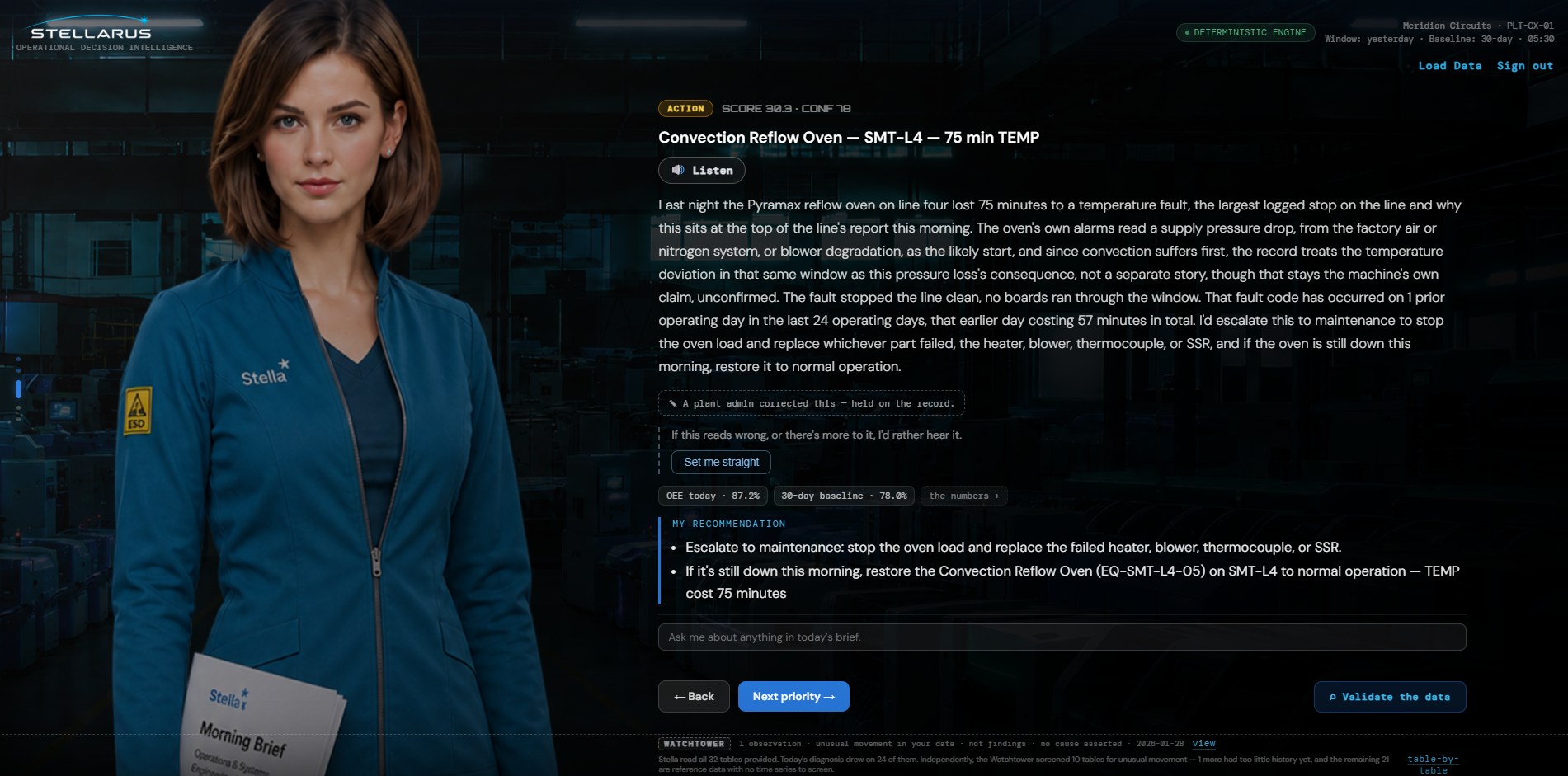
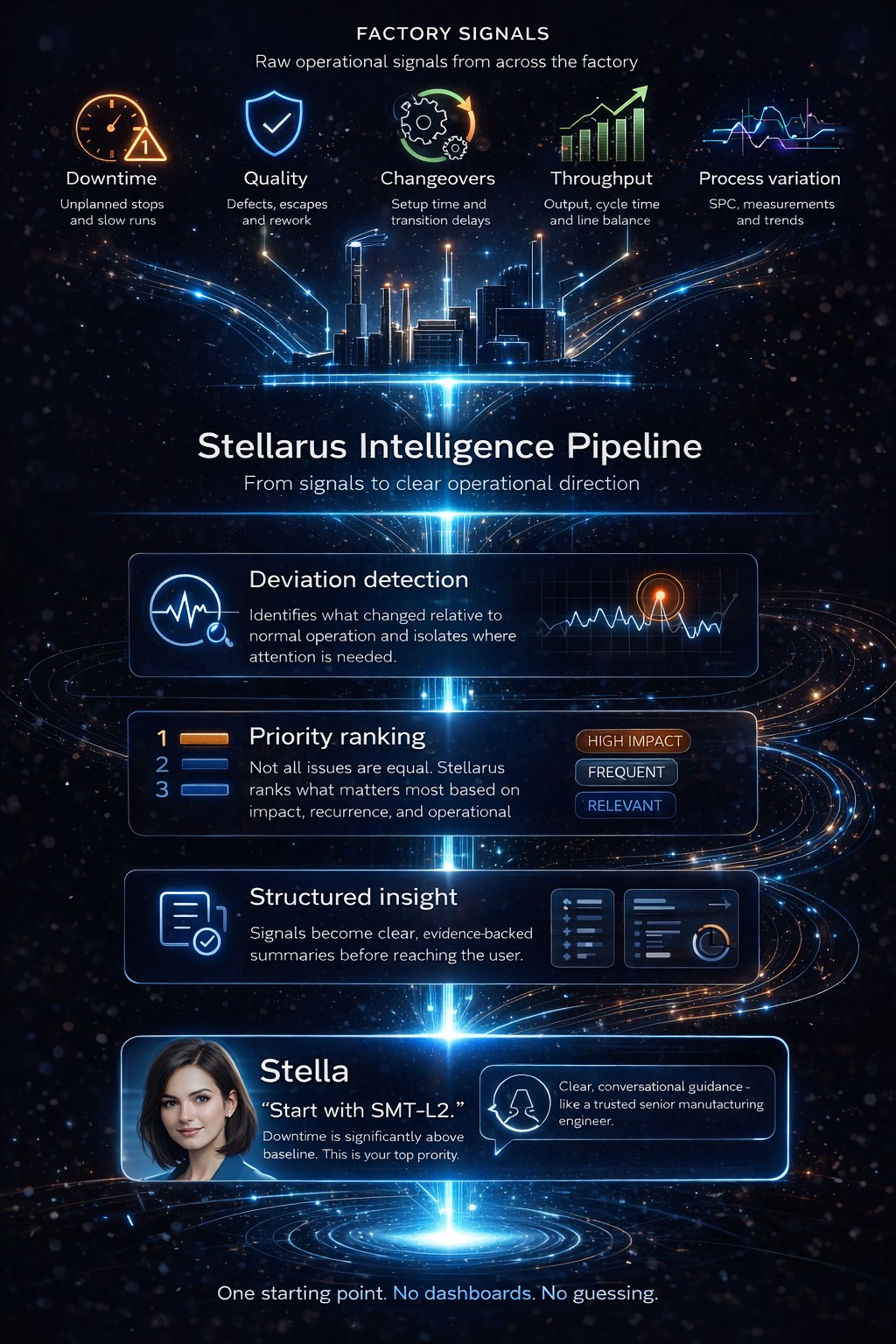
Stella reads the operational record a plant gives her. Every stop, every alarm, every changeover, every test result, every note the crew logged, all of it, together. Then she gives the team one ranked answer: what matters most, why it matters, and what to do about it. You bring her the record and she has already read it, cover to cover, before anyone sits down to look.
She is not a dashboard. A dashboard shows you the data and leaves the thinking to you. She does the thinking and shows you the evidence behind it. She is not a chatbot bolted onto a database, and she is not one of the AI assistants that will tell you whatever you want to hear. She is built to be the opposite of that, and how she is built is the entire point.
Why she does not lie
This is the part we care about most, and the part that took the longest to get right.
Most of the AI you have heard about works by prediction. It generates what sounds right, which means it can generate what sounds right and is completely wrong, with total confidence. In a chat window that is an annoyance. On a factory floor it is a liability. It quietly points your best people at the wrong thing, day after day, and nobody catches it, because it always has an answer and the answer always sounds reasonable.
Stella cannot do that, and not because we asked her nicely. The ranking is done by math, a deterministic engine that decides what matters and in what order using only what is actually in the record. The language model never touches the raw data and never decides anything. It only puts into plain words what the engine has already worked out. She can explain herself completely. She cannot make anything up. And when she does not know, she says so and tells you what she would need to know it.
We proved this before we would say it out loud. We measured what our own product could not yet see and wrote the number down instead of burying it. We sat her in front of thirty-six hostile questions from three kinds of skeptic, including the engineer who checks your arithmetic and the floor veteran who did not want her there and was hunting for one wrong sentence to dismiss her forever. She did not fail one. When she fell short at all, it was by saying too little, never by inventing. That is a design choice, not luck, and there are four provisional patent applications filed on how it works.
Why it took this long to reach you
A leader at a rep firm that has been in this industry thirty-five years put it plainly: "I was wondering when AI would come to this industry, and here it is."
That is worth sitting with, because the industry has been working toward this for decades. Standards so the machines would talk to each other. Connectivity companies to get the data off the equipment. Software that did its honest best to show you what was there and report it. Every one of those was a real answer to a real problem and every one of them helped. Your floor is more connected and more visible than it has ever been. In many plants that work is still only half done, the data partly shared and sitting in silos nobody can read together, but the direction has been right and the effort has been real.
All of it, though, was solving the same half of the problem: getting the data out and putting it in front of you. Even the intelligent tools, the ones that watch the machines as they run and flag when one starts to drift, are doing that, and doing it well. They are watching the machines, one signal at a time. What none of it could do is the other half, the part a person still had to do alone: sit with everything that happened, weigh it against everything else, and decide what actually matters. No stop or changeover or failed test means anything by itself. Someone has to read them together. That is the half that never got solved, because until very recently nothing could do it.
The money went elsewhere. The capital that built the last decade of AI went to a handful of very large companies, and those companies built for the problems large enough to justify it: billion-dollar questions in finance, logistics, and headquarters. A fifteen-line SMT floor was never going to be one of those problems. So the most capable tools in a generation were built for everyone but the people who make things. Meanwhile the smart factory you already paid for, the machines already logging every placement and stop and changeover, has been producing the record all along. Stella is the one who finally reads it.
What went into her
We want to be honest about the weight of this, because this industry has been sold plenty of software that demoed well and turned out thinner than the pitch, and you have every right to be skeptical of anything new on your floor.
She has a knowledge base built from real floor experience, and every piece of it carries where it came from, so a recommendation can tell you its source. She has a set of rules for how she speaks, and every one of them came from a real mistake we caught and corrected, not from a style guide. She holds what she suspects apart from what she knows and from what the floor has taught her, so she never dresses a guess up as a fact. When she gets something wrong, you can set her straight, and what you teach her stays on the record for the whole plant to benefit from.
None of that is glitter. It is the unglamorous machinery that separates a colleague you can trust from a tool that impresses you once and misleads you later.
Who she is for
She is for the engineers, operators, owners, and managers who believe technology matters and are tired of collecting data that never pays them back, the ones who bought the good equipment and actually use it. That has nothing to do with size. A shop running four lines well is exactly as much her plant as one running fifteen.
Why it exists
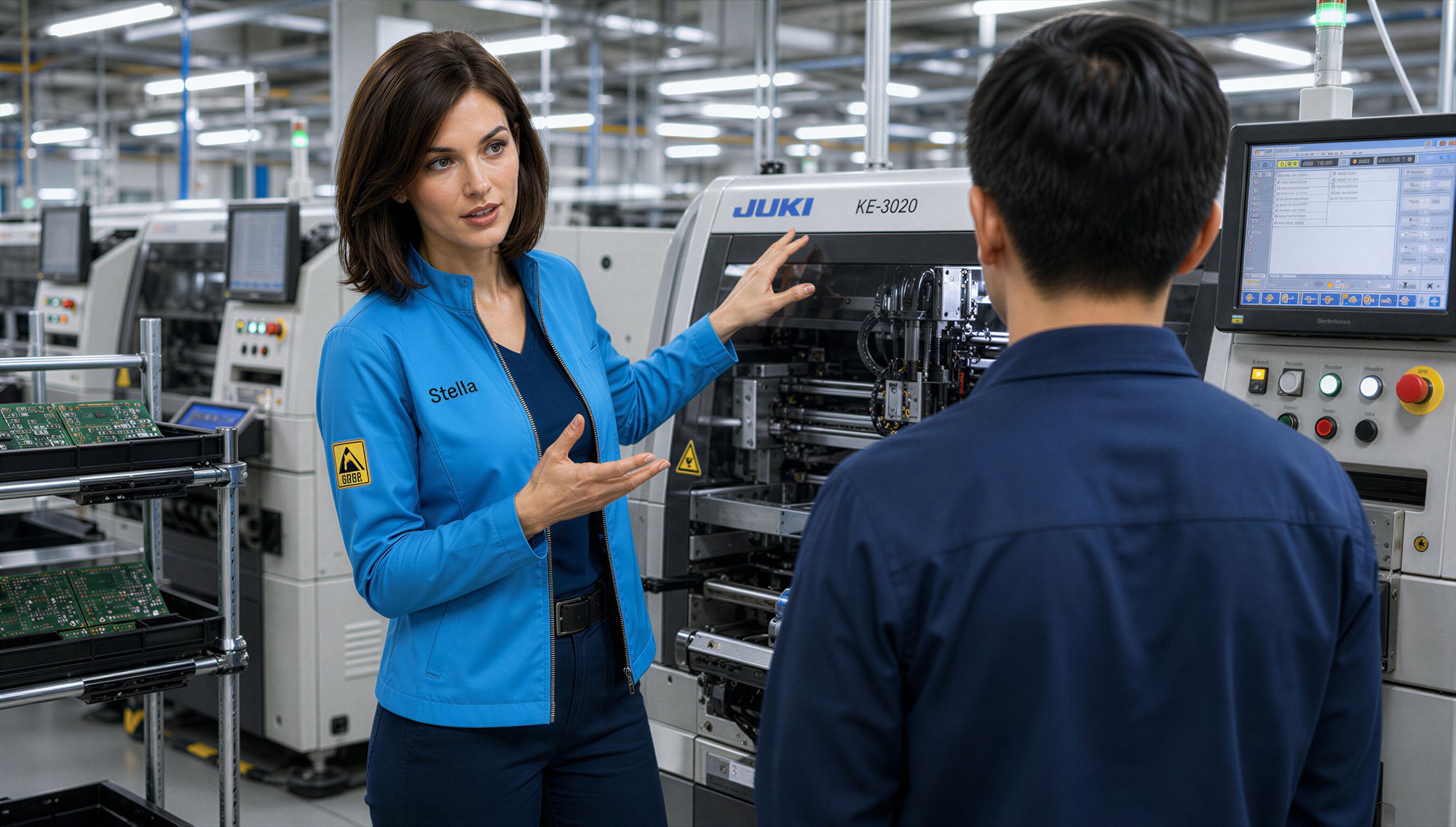
In every plant there is an engineer who knows the floor by feel, and in every plant that engineer eventually walks out the door, taking decades of that knowledge with them. It happens over and over, and this industry has never had an answer for it.
Stella is our answer. Not to replace that engineer, but to be the thing that reads the whole floor the way they could, never gets tired and never gets political, and tells you the truth about what happened every time you come to look.
This industry built the things the rest of the world runs on. We are trying to give something back to it while the people who built it are still here.
If that is the kind of thing you have been waiting for, we would like to hear from you.